Learn DSADSAContests
coding75 logo
LeetCode POTDPOTDSheets
coding75 Pro
coding75 logo
Dashboard
Learn DSA
Course RoadmapFlow
DSA Topic TreeNew 🚀
Contest SolutionsPractice
Practice Sheets
MasterclassesLive 👨🏻‍💻

coding75 ProPRO

Live Classes & Placement Guidance

coding75 logo

The premier developer platform for mastering Data Structures & Algorithms, exploring contest editorials, building ATS-ready resumes, and accelerating your tech career.

Connect & Community

DSA & Contests

  • Learn DSA
  • Contest Solutions
  • LeetCode POTDDaily
  • Practice Sheets
  • MasterclassesSoon

Interview Prep

  • Portfolio Projects
  • CS Fundamentals
  • System DesignSoon
  • Interview ExperiencesSoon
  • Mock InterviewsSoon

Career & Pro

  • Jobs & Internships
  • Resume BuilderATS
  • coding75 Pro
  • Submit Feedback
© 2026coding75•crackDSA™•Maa Lalita Edtech Private Limited. All Rights Reserved.
Privacy PolicyTerms & ConditionsContact Support
Registered Office: Kanpur 208021•Regional Office: Indiranagar, Bangalore, 560008
Maa Lalita Edtech Private Limited
Contests/LeetCode/Weekly Contest 409/3242. Design Neighbor Sum Service
Next
LeetCodeLeetCode
Easy
Weekly Contest 409

3242. Design Neighbor Sum Service

MathHashingMatrix
Loading...
Solve on LeetCode

Problem Statement

Official algorithmic problem description and constraints.

Open on LeetCode

You are given a n x n 2D array grid containing distinct elements in the range [0, n2 - 1].

Implement the neighborSum class:

  • neighborSum(int [][]grid) initializes the object.
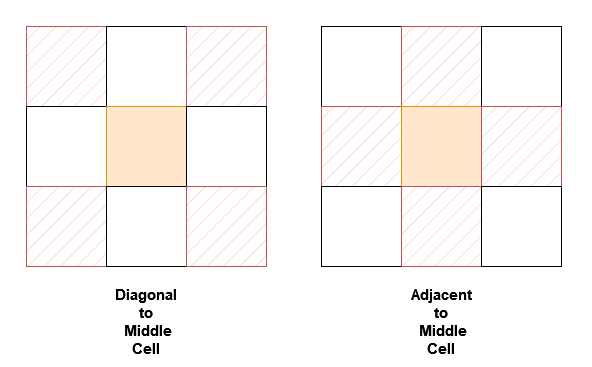
  • int adjacentSum(int value) returns the sum of elements which are adjacent neighbors of value, that is either to the top, left, right, or bottom of value in grid.
  • int diagonalSum(int value) returns the sum of elements which are diagonal neighbors of value, that is either to the top-left, top-right, bottom-left, or bottom-right of value in grid.
 

Example 1:

Input:

["neighborSum", "adjacentSum", "adjacentSum", "diagonalSum", "diagonalSum"]

[[[[0, 1, 2], [3, 4, 5], [6, 7, 8]]], [1], [4], [4], [8]]

Output: [null, 6, 16, 16, 4]

Explanation:
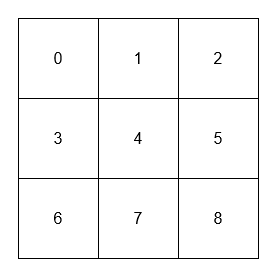
  • The adjacent neighbors of 1 are 0, 2, and 4.
  • The adjacent neighbors of 4 are 1, 3, 5, and 7.
  • The diagonal neighbors of 4 are 0, 2, 6, and 8.
  • The diagonal neighbor of 8 is 4.

Example 2:

Input:

["neighborSum", "adjacentSum", "diagonalSum"]

[[[[1, 2, 0, 3], [4, 7, 15, 6], [8, 9, 10, 11], [12, 13, 14, 5]]], [15], [9]]

Output: [null, 23, 45]

Explanation:
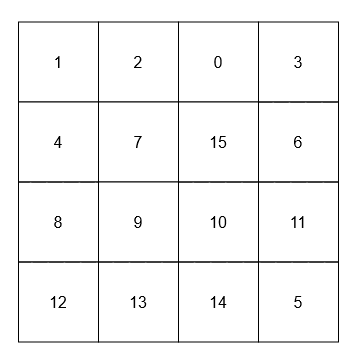
  • The adjacent neighbors of 15 are 0, 10, 7, and 6.
  • The diagonal neighbors of 9 are 4, 12, 14, and 15.


Constraints:

  • 3 <= n == grid.length == grid[0].length <= 10
  • 0 <= grid[i][j] <= n2 - 1
  • All grid[i][j] are distinct.
  • value in adjacentSum and diagonalSum will be in the range [0, n2 - 1].
  • At most 2 * n2 calls will be made to adjacentSum and diagonalSum.


Solutions & Walkthrough

Detailed video explanations, mathematical intuition, and clean C++ implementation code.

Connecting secure classroom stream...
Back to Weekly Contest 409
Next Problem