Learn DSADSAContests
coding75 logo
LeetCode POTDPOTDSheets
coding75 Pro
coding75 logo
Dashboard
Learn DSA
Course RoadmapFlow
DSA Topic TreeNew 🚀
Contest SolutionsPractice
Practice Sheets
MasterclassesLive 👨🏻‍💻

coding75 ProPRO

Live Classes & Placement Guidance

coding75 logo

The premier developer platform for mastering Data Structures & Algorithms, exploring contest editorials, building ATS-ready resumes, and accelerating your tech career.

Connect & Community

DSA & Contests

  • Learn DSA
  • Contest Solutions
  • LeetCode POTDDaily
  • Practice Sheets
  • MasterclassesSoon

Interview Prep

  • Portfolio Projects
  • CS Fundamentals
  • System DesignSoon
  • Interview ExperiencesSoon
  • Mock InterviewsSoon

Career & Pro

  • Jobs & Internships
  • Resume BuilderATS
  • coding75 Pro
  • Submit Feedback
© 2026coding75•crackDSA™•Maa Lalita Edtech Private Limited. All Rights Reserved.
Privacy PolicyTerms & ConditionsContact Support
Registered Office: Kanpur 208021•Regional Office: Indiranagar, Bangalore, 560008
Maa Lalita Edtech Private Limited
Contests/LeetCode/Weekly Contest 414/3283. Maximum Number of Moves to Kill All Pawns
Prev
LeetCodeLeetCode
Hard
Weekly Contest 414

3283. Maximum Number of Moves to Kill All Pawns

Dynamic ProgrammingBitmaskShortest PathBreadth-First SearchGraph
Loading...
Solve on LeetCode

Problem Statement

Official algorithmic problem description and constraints.

Open on LeetCode

There is a 50 x 50 chessboard with one knight and some pawns on it. You are given two integers kx and ky where (kx, ky) denotes the position of the knight, and a 2D array positions where positions[i] = [xi, yi] denotes the position of the pawns on the chessboard.

Alice and Bob play a turn-based game, where Alice goes first. In each player's turn:

  • The player selects a pawn that still exists on the board and captures it with the knight in the fewest possible moves. Note that the player can select any pawn, it might not be one that can be captured in the least number of moves.
  • In the process of capturing the selected pawn, the knight may pass other pawns without capturing them. Only the selected pawn can be captured in this turn.

Alice is trying to maximize the sum of the number of moves made by both players until there are no more pawns on the board, whereas Bob tries to minimize them.

Return the maximum total number of moves made during the game that Alice can achieve, assuming both players play optimally.

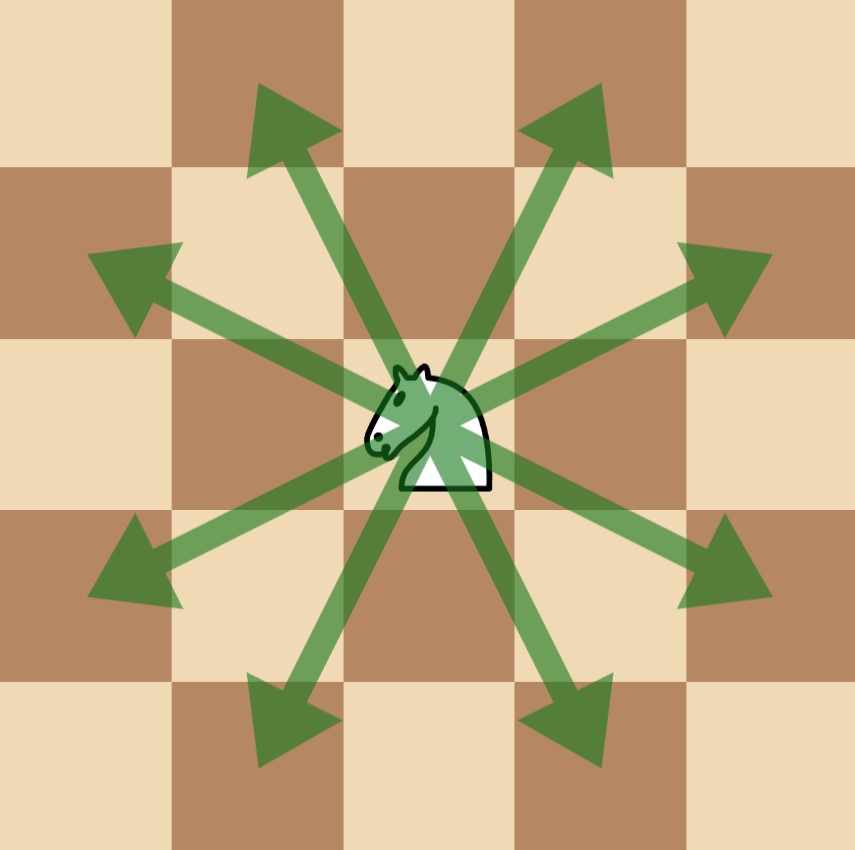
Note that in one move, a chess knight has eight possible positions it can move to, as illustrated below. Each move is two cells in a cardinal direction, then one cell in an orthogonal direction.
 

Example 1:

Input: kx = 1, ky = 1, positions = [[0,0]]

Output: 4

Explanation:
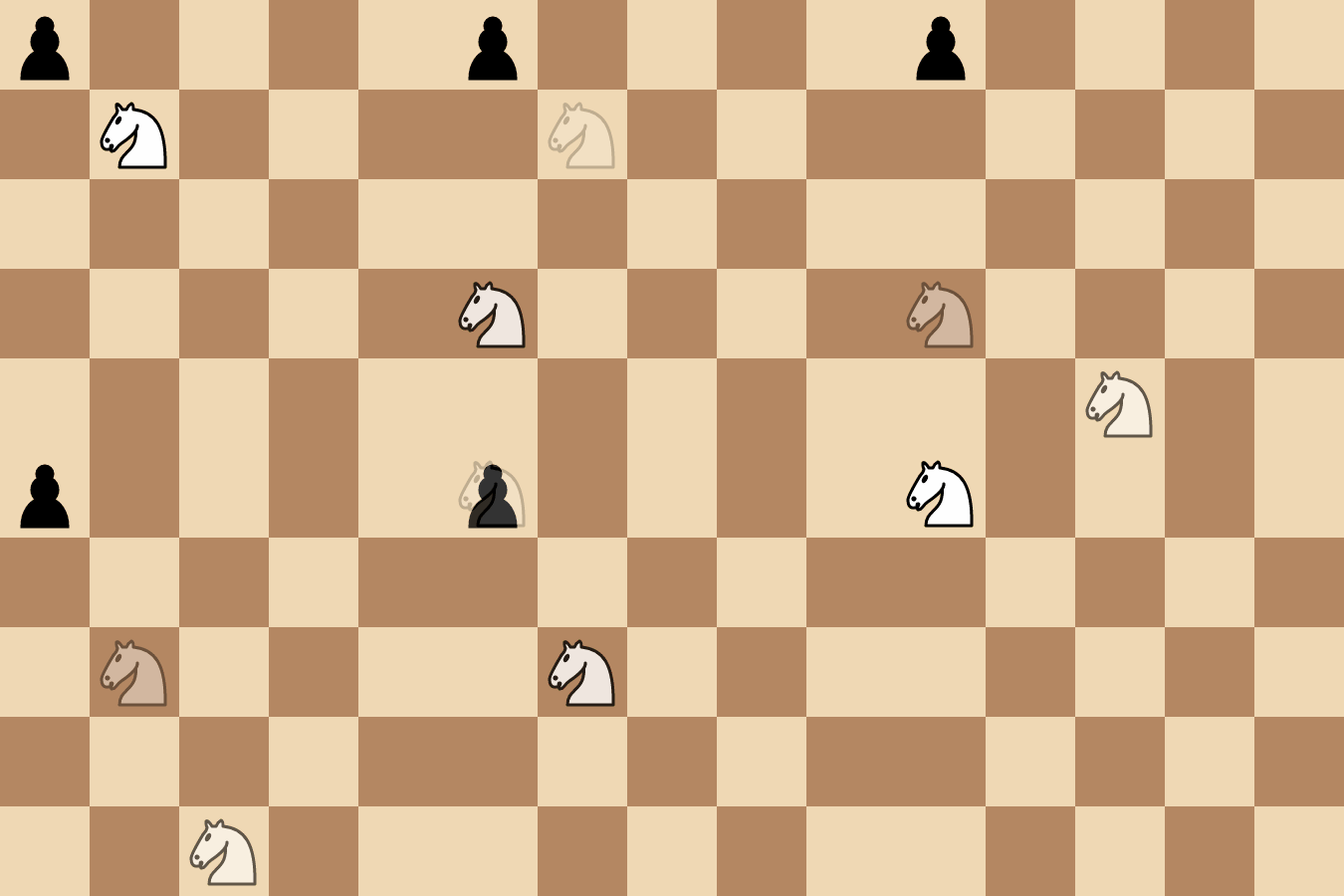
The knight takes 4 moves to reach the pawn at (0, 0).

Example 2:

Input: kx = 0, ky = 2, positions = [[1,1],[2,2],[3,3]]

Output: 8

Explanation:
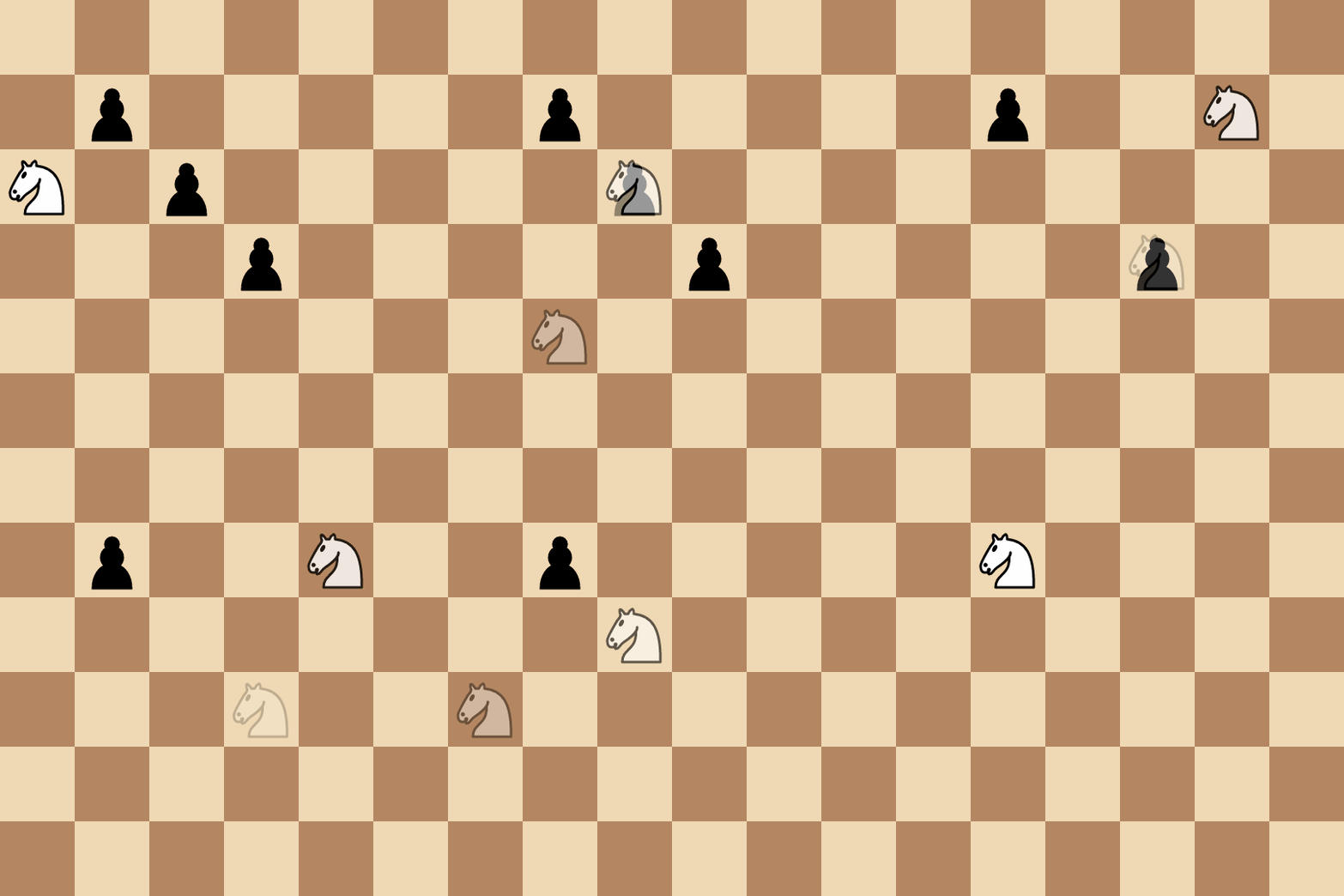
  • Alice picks the pawn at (2, 2) and captures it in two moves: (0, 2) -> (1, 4) -> (2, 2).
  • Bob picks the pawn at (3, 3) and captures it in two moves: (2, 2) -> (4, 1) -> (3, 3).
  • Alice picks the pawn at (1, 1) and captures it in four moves: (3, 3) -> (4, 1) -> (2, 2) -> (0, 3) -> (1, 1).

Example 3:

Input: kx = 0, ky = 0, positions = [[1,2],[2,4]]

Output: 3

Explanation:

  • Alice picks the pawn at (2, 4) and captures it in two moves: (0, 0) -> (1, 2) -> (2, 4). Note that the pawn at (1, 2) is not captured.
  • Bob picks the pawn at (1, 2) and captures it in one move: (2, 4) -> (1, 2).


Constraints:

  • 0 <= kx, ky <= 49
  • 1 <= positions.length <= 15
  • positions[i].length == 2
  • 0 <= positions[i][0], positions[i][1] <= 49
  • All positions[i] are unique.
  • The input is generated such that positions[i] != [kx, ky] for all 0 <= i < positions.length.


Solutions & Walkthrough

Detailed video explanations, mathematical intuition, and clean C++ implementation code.

Connecting secure classroom stream...
Back to Weekly Contest 414
Previous Problem